

We Spoke with Pope
Nick, that is. Plus, the most important book of 2025 comes out in the 11th hour!


A note from the editor before jumping into Bernie O’Connor’s chat with Nick Pope:
We want to personally congratulate Bernie on the release of his new book: THE OFFICIAL HISTORY OF “OFFICIAL UFO MAGAZINE”: The Best Articles from the First Six Issues
He is too humble to brag about his accomplishments, so we will. Bernie was the founding editor of OFFICIAL UFO MAGAZINE when it debuted in 1975. The magazine was an outlet for serious discussion about the topic and hosted the bylines of many famous UFO researches and authors. The content is gold, but back issues are hard to come by. Luckily, Bernie has remedied this with this newly released volume.
First off, this thing is gorgeous.
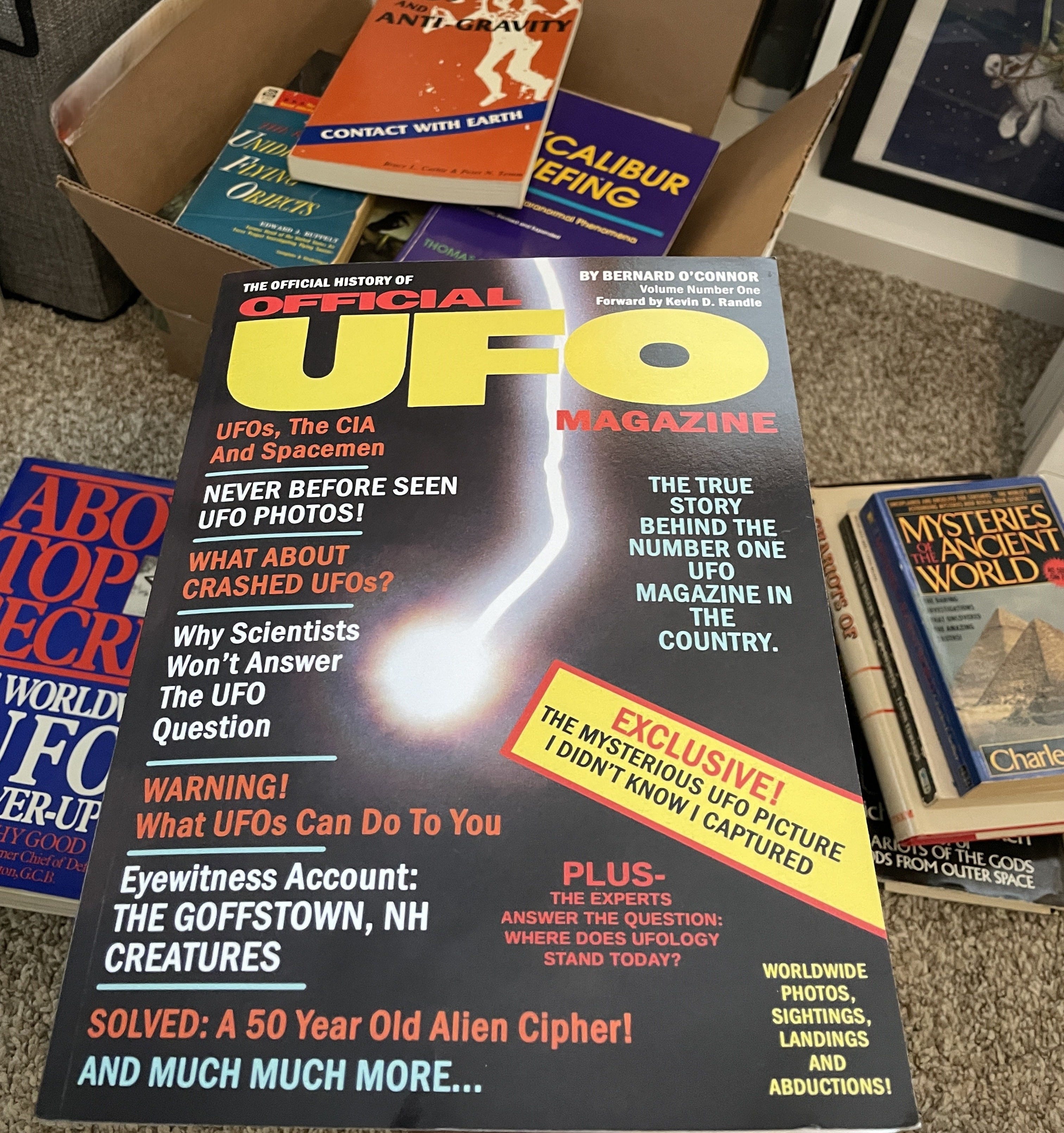
The interior pages are reproduced in crisp, vibrant color. This isn’t some photocopied, hard-to-read, blurry reproduction.
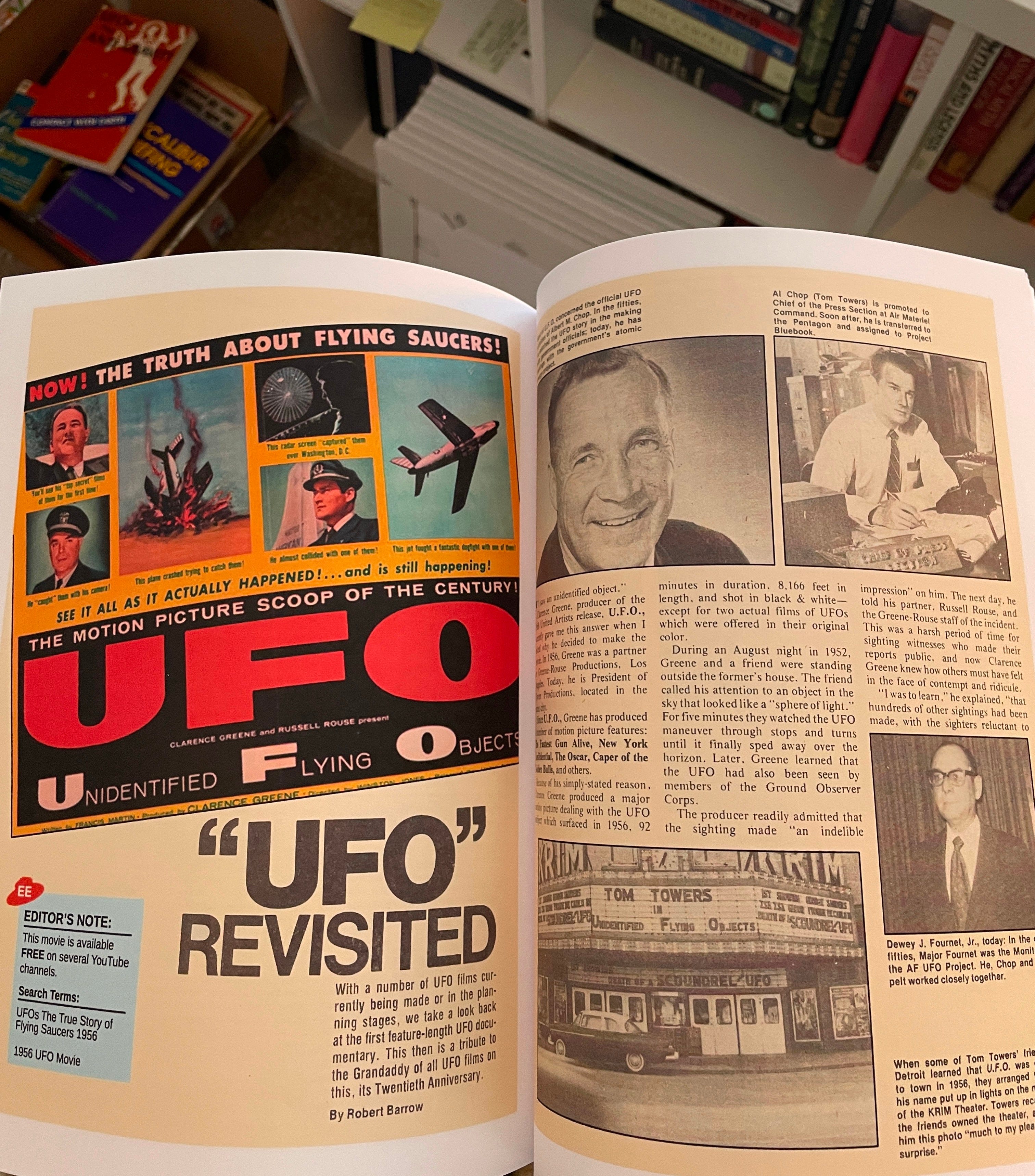
It also includes new editor’s notes and added content to put these classic articles in an updated context.
Did we mention how pretty it is?
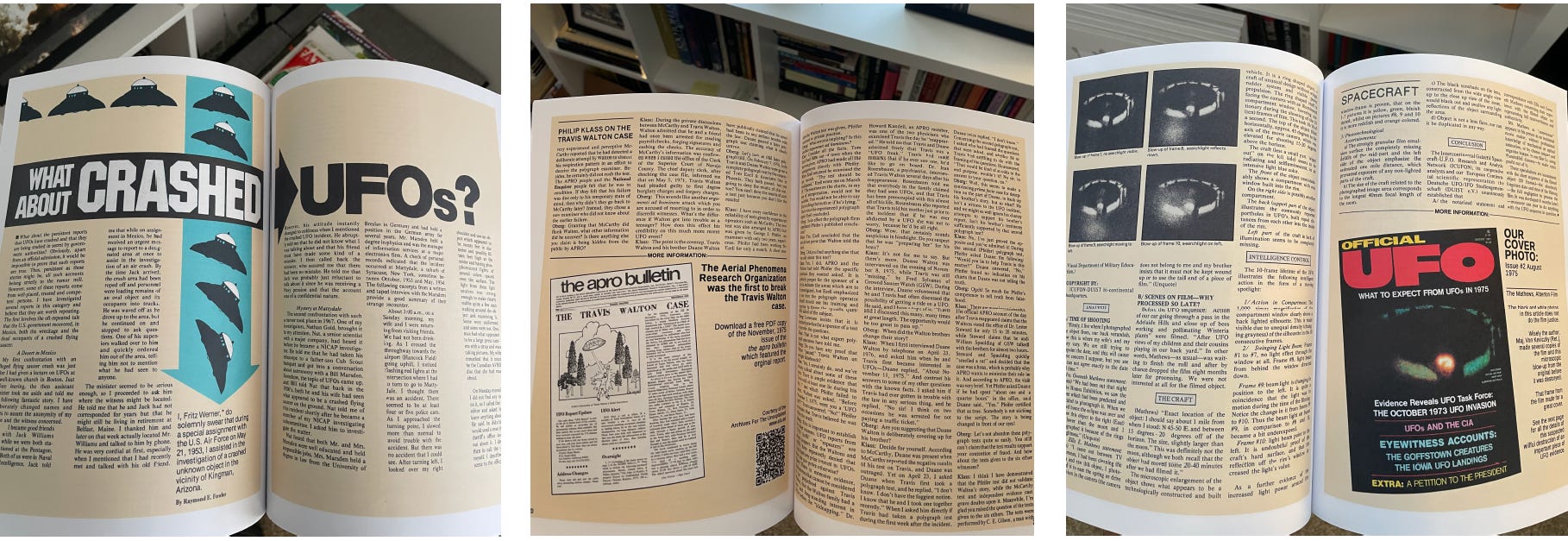
Over 300 beautiful pages and more than 50 illustrated articles by the game’s top voices make THE OFFICIAL HISTORY OF “OFFICIAL UFO MAGAZINE” a must-own product for every UFO aficionado.
If that scamp Santa forgot your UFO paraphernalia this year, be sure to make up for his shortcomings and grab a copy of OFFICIAL UFO here.

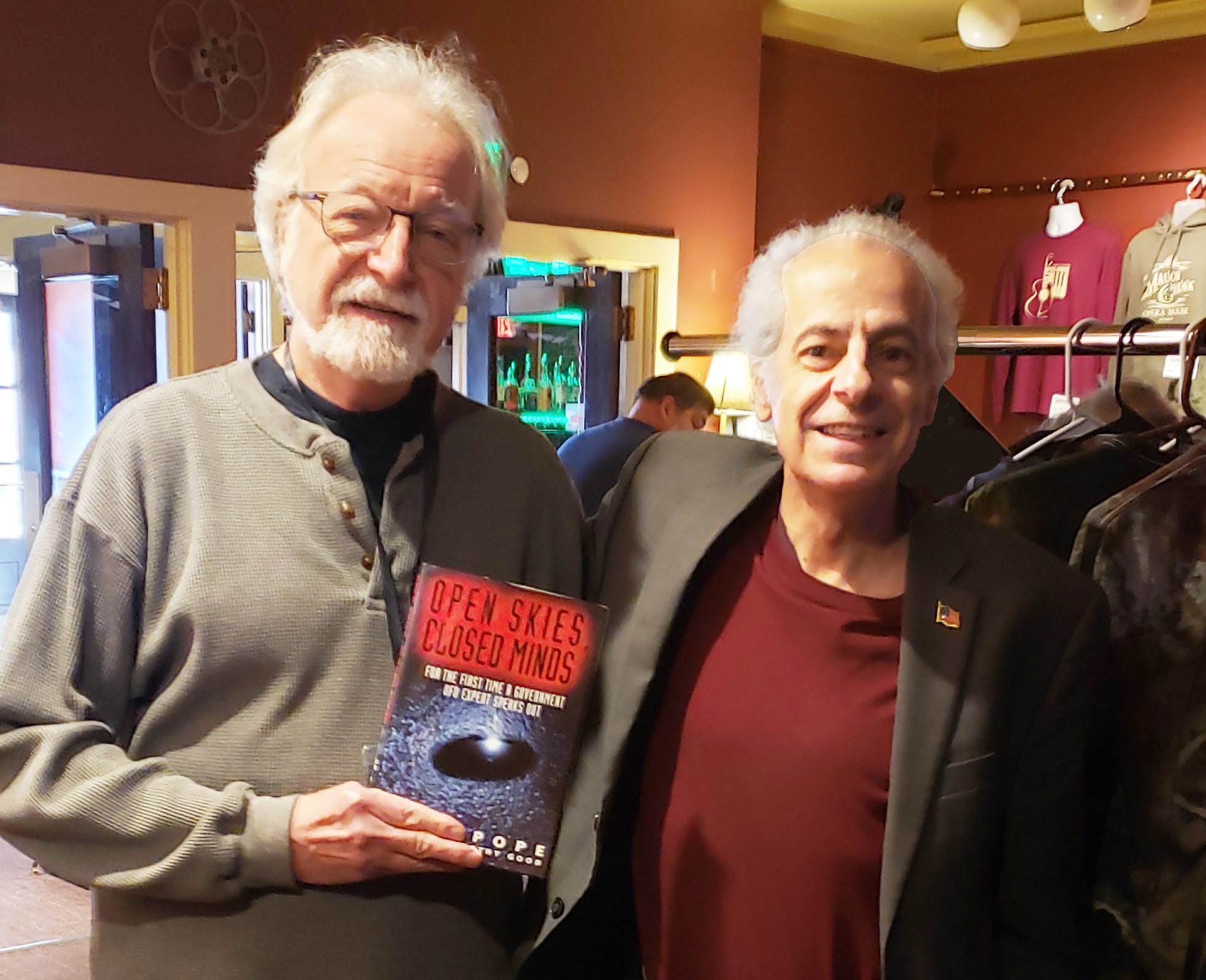
If anyone could claim having the most interesting job in any country, it would be Nick Pope. This is also a chapter heading in his bestselling book from 1996: Open Skies, Closed Minds. From 1991 through 1994 years he was in charge of what was called the “UFO Desk” for the U.K.’s Ministry of Defense.
Talk about interesting jobs—the media calls him “the real Fox Mulder.” He was literately the UK’s inside man on the front line of the UFO question.
An accomplished author, journalist, and one of the stars on the History Channel’s top rated show, Ancient Aliens, Nick Pope is one of the world’s leading experts on UFOs, the unexplained, and conspiracy theories. He has presented, contributed to, and consulted on numerous TV shows on these subjects. Nick Pope has written two science fictions novels and is a leading commentator on the sci-fi genre.
After giving his fascinating talk at the Jim Thorpe ParaCon, he graciously consented to an interview.
BERNIE: Thank you Nick for taking time out from your hectic day to speak to the readers of THE OBSERVER.
NICK POPE: I’m happy to Bernie, please ask away.
B: Before you were appointed to the UFO desk in the Ministry of Defense, did you have any interest in UFOs or the paranormal at all?
NP: I had no previous knowledge or interest in UFOs and the paranormal before I was assigned to the MOD’s ‘UFO Desk’. On reflection, while that might sound like a disadvantage, I think it was probably the best way to start, because I had no preconceived ideas about these phenomena, and was thus able to undertake my research and investigations in an open-minded, data-led way.
B: If I understand it right, the UFO desk was staffed by two people, but you usually worked alone?
NP: The UFO Desk was essentially just me as the subject matter expert, plus an administrative officer who provided clerical support. That said, I could draw upon the expertise, resources and capabilities of many other experts, as required, to help in investigations. This included military radar specialists, Intelligence Community imagery analysts, as well as personnel in organizations such as the Meteorological Office and the Royal Observatory. We were a little office with a big reach!
B: Did you go out into the field and do face-to-face interviews with the civilian or military witnesses?
NP: Field visits may be common with civilian UFO groups, but government UFO work is generally HQ-based and revolves around things like MASINT (Measurement and Signature Intelligence). That said, I did meet some witnesses face-to-face, though it wasn’t the general rule, especially with the public.
B: Were civilian and military reports treated the same? Or were they compartmentalized differently?
NP: In theory, we were supposed to treat civilian and military reports the same, but inevitably we gave more weight to sightings from military personnel - particularly pilots and radar operators, due to their being trained observers. This led to some interesting debates, because some people in the MOD wanted to cut out the public altogether, and only accept reports from military personnel, commercial airline pilots, and perhaps police officers. But others argued that gathering as much data as possible was the better strategy, and that it was patronizing and wrong to think no good information or evidence could ever come from the public. I supported the latter viewpoint.
B: Did your office ever liaison with the U.S. Air Force or any other branch of the military or government?
NP: Despite this being a global phenomenon, there was surprisingly little international collaboration, and liaison with the US presented a particularly tricky diplomatic problem. I was doing this job long before AAWSAP, AATIP, the UAP Task Force and AARO were created, and the US government’s public position at the time was that UFOs were no longer being researched or investigated. At least since Project Blue Book was terminated at the end of 1969. Obviously we couldn’t do or say anything that would undermine that US position.
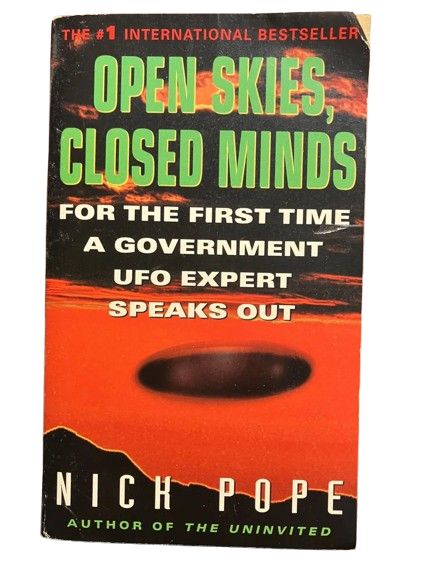
B: Since the publication of your first book: Open Skies Closed Minds in 1996, how do you think, if any, has the public’s opinion on UFOs changed?
NP: Open Skies Closed Minds was published nearly 30 years ago, and since then we’ve seen the subject of UFOs transition from fringe to mainstream, at least in the United States. The December 2017 article in the New York Times about the Advanced Aerospace Threat Identification Program (AATIP) and the US Navy videos of UAP played a big part in this. As a result, the mainstream media no longer treats this subject as part-conspiracy theory and part-science fiction, but as a serious defense, national security and safety of flight issue.
B: The most famous UFO mystery that you brought to light is the missing Calvine photo case from the DOD’s wall. When a copy of the original photo was discovered by investigative journalist, Dr. David Clarke, what was your reaction to this news? What about the controversy following this discovery that it’s just a rock sticking out of a pond? Could it be the top secret Aurora project?
NP: The UK Ministry of Defense (MOD) hasn’t commented on the authenticity of the photo that retired Royal Air Force press officer Craig Lindsay gave to various ufologists, so I can’t comment either. But suffice to say the case is a very interesting one, and I’ve seen all six images. I’ve seen at least three skeptical theories recently: that it’s a rock in water, a Christmas decoration, or a mountaintop poking through low clouds. But all these theories are based on Craig Lindsay’s image, and as I say, the MOD hasn’t confirmed its authenticity, and in any case, it’s only one of a series of six photos.
It’s quite possible the images showed a secret, prototype aircraft, and people should bear in mind that the photos were taken just two days after Saddam Hussein invaded Kuwait in August of 1990, so a lot of high-tech military hardware was being readied for action. As for Aurora, even if it didn’t exist as a mission ready aircraft, something like it almost certainly did, at least in prototype form.
B: What do you think about the present day disclosure movement? Do you think this effort to “Make the government come clean!” will get anywhere? What about the Congressional hearings? Have they helped the disclosure movement in any way?
NP: Congressional engagement whether it’s the classified briefings, or the open public hearings - has certainly moved things forward. And in these politically divided times, it’s refreshing that this Congressional engagement is bipartisan. Following on from this, we now have the newly-formed Task Force on the Declassification of Federal Secrets looking at UAP and USOs. There’s a lot of overlap between this Task Force and the House Oversight Committee, but it will be interesting to see what happens next. But I’m not sure how much any of this has to do with the Disclosure movement, as opposed to what I characterize as a “believer faction” inside the government. On this subject, one of the most interesting developments next year will be the publication of Jay Stratton’s book. Given that he was director of the UAP Task Force, this should be interesting and important. The new documentary “The Age of Disclosure” should also raise awareness.
B: What about these so-called whistleblowers coming forth with all this “bombshell” testimonies? Can we accept these claims at face value?
NP: All the whistleblowers who’ve testified in public hearings have gone through rigorous vetting procedures beforehand, to make sure they are who they say they are, and they worked where they say they worked. But this doesn’t necessarily validate their claims, and it’s important to differentiate between what someone knows, and what someone believes perhaps by virtue of having been told things, but without having seen them firsthand. That being said, lying under oath to Congress is a federal offense, so while none of this whistleblower testimony constitutes definitive proof, it’s certainly intriguing evidence. There are more whistleblowers who’ve come forward, but until they’ve been vetted by Congressional staffers, we can’t really evaluate them, let alone their claims.
B: Do you have a favorite theory as to what UFOs are?
NP: I rather like the idea that we’re dealing with something beyond our comprehension. Often when we consider UFOs and other paranormal phenomena ,we use words like “aliens”, “ghosts” and so on. But we can only look at any of this through the lens of our culture and belief system, and we can only describe any of this in terms of the language we have. But ultimately, these words are just labels, and may not accurately describe something that may be forever beyond the scope of our understanding.
B: I think the following questions are the most important questions readers of THE OBSERVER would like to know your opinion on: Where does the field of Ufology stand today? How has it changed since the publication of your first book? Is it in good shape? What mistakes, if any, are investigators making today? And what proper steps can investigators take to solve the UFO mystery?
NP: Ufology is at a crossroads. The subject has moved out of the fringe and into the mainstream, but despite all the progress, there’s still no smoking gun. That’s a problem, because now, nearly nine years after the New York Times article that started this fringe to mainstream process, some people are getting frustrated and fatigued, and increasingly suspicious of some of the figures who have narrative control. The mistakes investigators make mainly involve a lack of critical thinking, and not being able to identify credible sources. Artificial Intelligence is also important. While it can help, e.g. in finding patterns in large data sets, it can also be used to generate fake images that can fool people and waste a lot of time. Learning how to effectively use AI and not get fooled by it might be the key to solving the UFO mystery.
B: Thank you Nick, I know our readers really appreciate you sharing your thoughts on UFOs!
NP: I’m always glad to share my thoughts on this puzzling phenomenon with anybody who is seriously interested in it.
Visit Nick’s website and follow him on X.


 | A guest post by
|
Thank you, Mike! All the best of the New Year to you and yours. And thank you for reading my articles!
I like to think that very nearly anything is ultimately comprehensible -- perhaps not strictly according to the means and strictures of what we now call science -- by virtue of existing within an ordered cosmos. I see no reason to believe that UFOs are excluded from this simply on the basis of their apparently fugitive or clandestine nature.